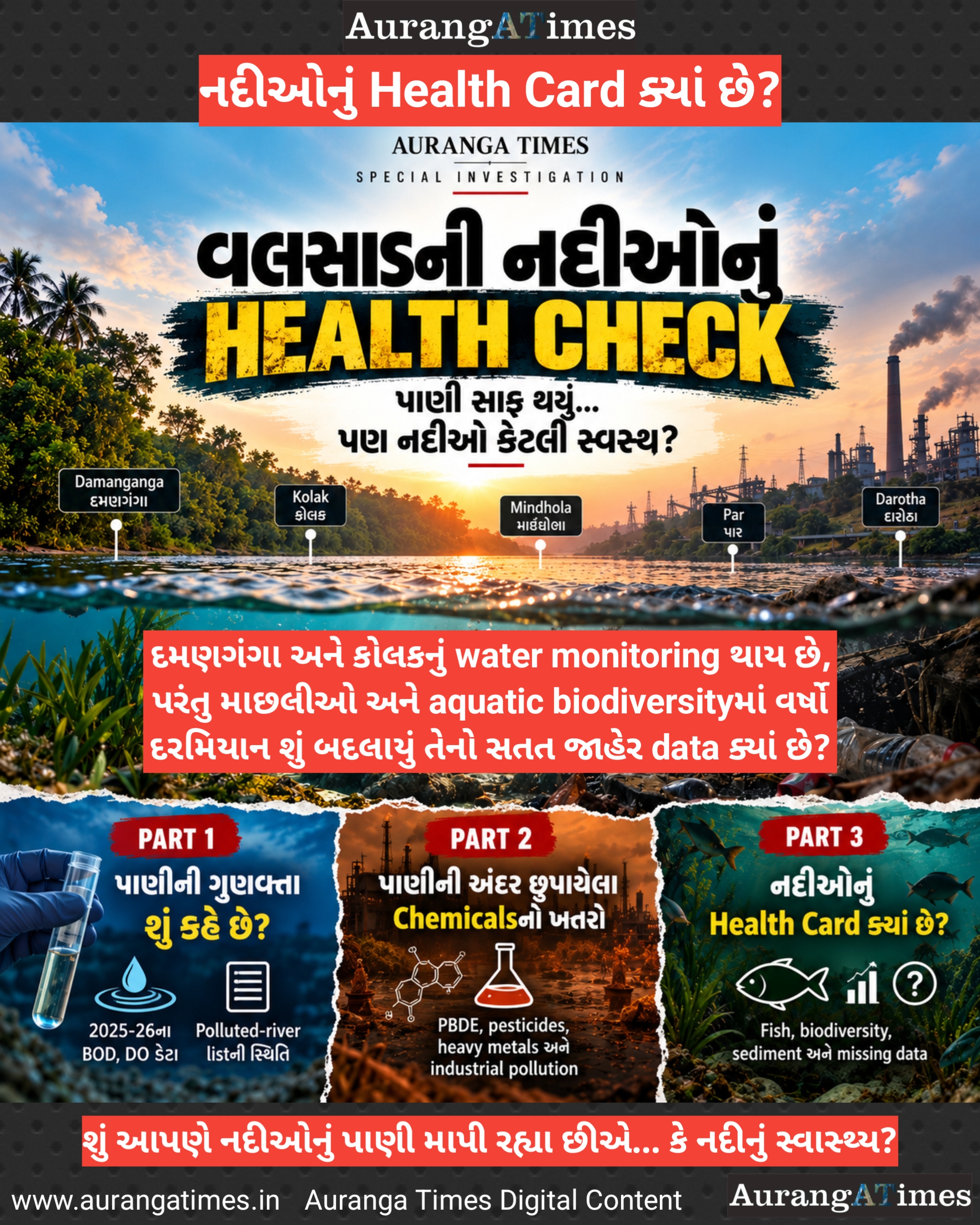
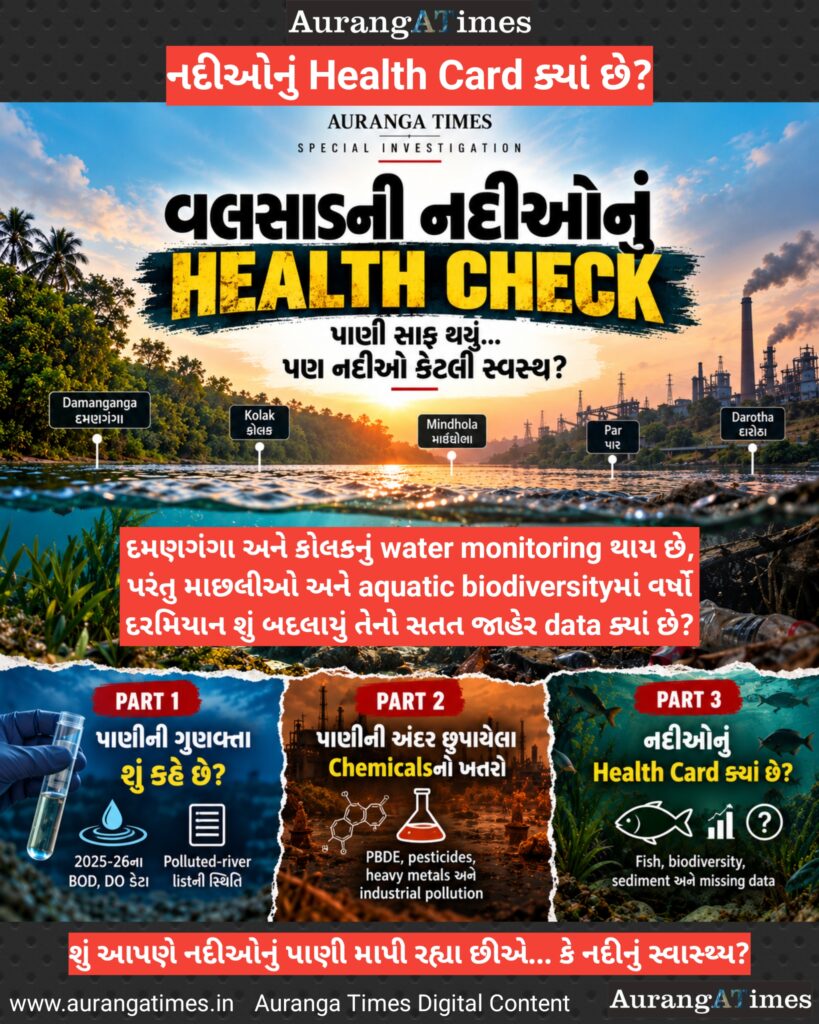
દમણગંગા અને કોલકનું water monitoring થાય છે, પરંતુ માછલીઓ અને aquatic biodiversityમાં વર્ષો દરમિયાન શું બદલાયું તેનો સતત જાહેર data ક્યાં છે?
અહીં આખી તપાસનો સૌથી મોટો સવાલ ઊભો થાય છે. સરકાર નદીઓનું water-quality monitoring કરે છે. પરંતુ નદીનું ecosystem માત્ર પાણી નથી.
નદી એટલે: પાણી + માછલી + plankton + benthos + sediment + aquatic vegetation + microorganisms
વલસાડની નદીઓ માટે આ તમામ componentsનું લાંબા ગાળાનું comparable monitoring કેટલું થાય છે?
આ સવાલનો સ્પષ્ટ જવાબ હાલ ઉપલબ્ધ જાહેર dataમાંથી મળતો નથી. દમણગંગાના estuary અંગે અગાઉના scientific studyમાં 14 fish species નોંધાઈ હતી. પરંતુ એ baselineને 2025–26ના નવા systematic fish-population survey સાથે સરખાવીએ તો કેટલી species વધી, કેટલી ઘટી અને fish abundanceમાં શું ફેરફાર થયો—તેનો સતત જાહેર long-term dataset મળતો નથી.
એટલે આજે આપણે વિશ્વાસપૂર્વક કહી શકતા નથી કે: “દમણગંગામાં માછલીઓ X ટકા ઘટી ગઈ.” અને એ જ રીતે કોલક, પાર, ઔરંગા અને દારોઠા માટે પણ 2025–26ના comparable fish-population dataનો અભાવ તપાસનો મહત્વનો મુદ્દો છે.
એટલે આખી 3-Part Seriesનો સૌથી મોટો સવાલ “શું આપણે નદીઓનું પાણી માપી રહ્યા છીએ… કે નદીનું સ્વાસ્થ્ય?”
આ બે વસ્તુ અલગ હોઈ શકે છે. CPCBના 2025 assessment મુજબ દેશમાં polluted river stretchesની સંખ્યા 2018ના 351થી ઘટીને 2025માં 296 થઈ છે અને 71 stretchesમાં improvement નોંધાયું છે. આ સારા સમાચાર છે.
પરંતુ હવે આગળનો પ્રશ્ન:
- શું BOD સુધારાની સાથે fish biodiversity પણ સુધરી?
- શું sedimentમાંથી persistent chemicals ઘટ્યા?
- શું aquatic species પાછી આવી?
- શું industrial stretchesમાં ecological recovery થઈ?
આ પ્રશ્નોના જવાબ માટે માત્ર BOD અને DO પૂરતા નથી.